 Store Locator

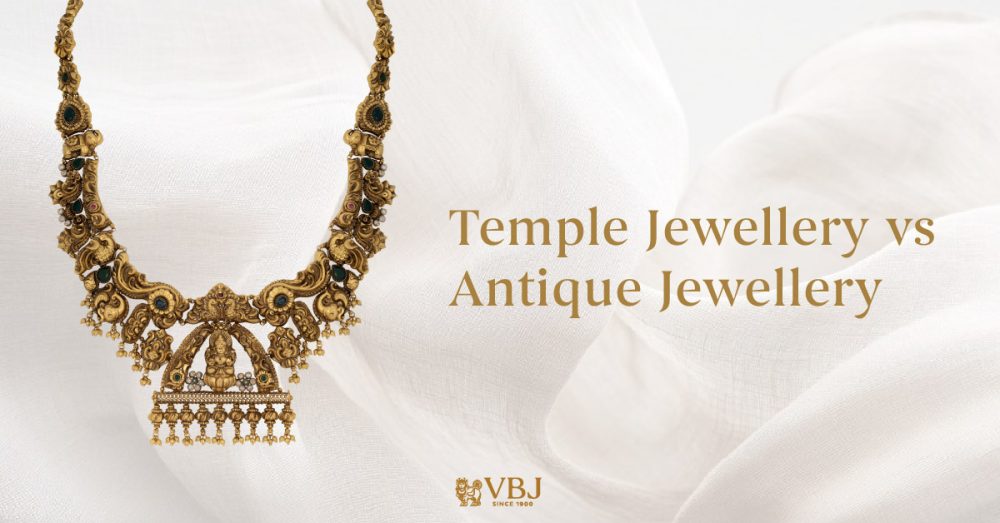
Temple jewellery and antique jewellery are among the most sought-after styles in Indian jewellery, especially for weddings, festivals, and traditional celebrations. While they are often used interchangeably, the two are not the same. Both showcase exceptional craftsmanship and heritage, but they differ significantly in their origins, design philosophy, finish, symbolism, and styling.
Understanding the difference between temple jewellery and antique jewellery helps you choose pieces that best suit your personality, wardrobe, and occasions. Whether you’re a bride, a jewellery collector, or someone looking to invest in timeless pieces, this guide will help you make an informed decision.
What Is Temple Jewellery?
Temple jewellery traces its roots back to South Indian temples, where ornate gold ornaments were originally created to adorn the idols of Hindu deities. Over time, these elaborate designs became an important part of royal wardrobes before eventually becoming an integral part of bridal jewellery and classical dance costumes.
Today, temple jewellery continues to represent devotion, prosperity, and heritage, making it one of the most treasured forms of traditional Indian jewellery.
Characteristics of Temple Jewellery
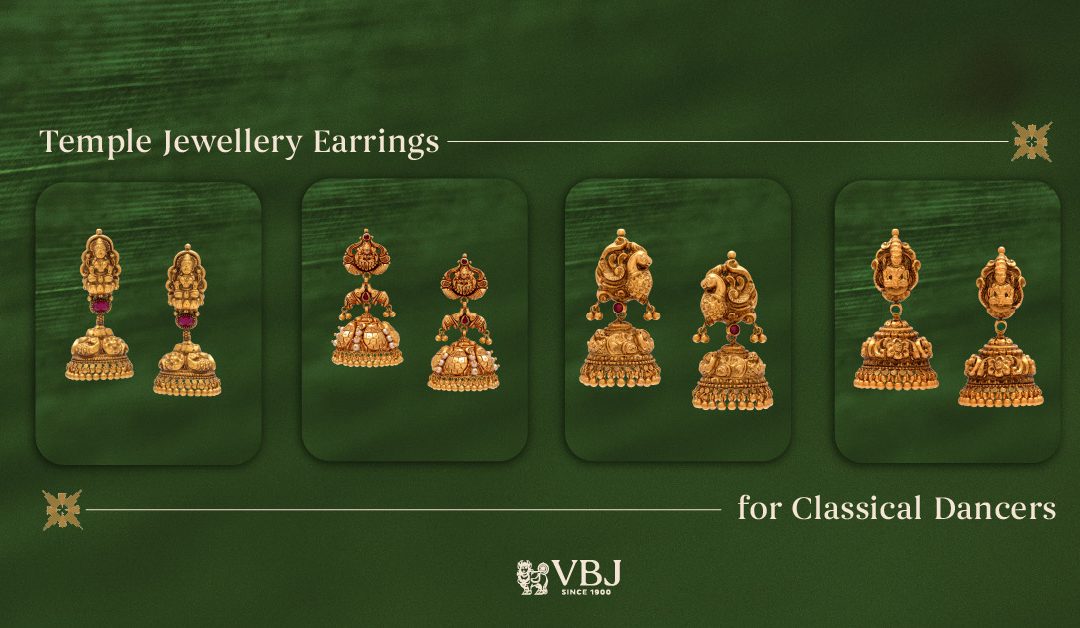
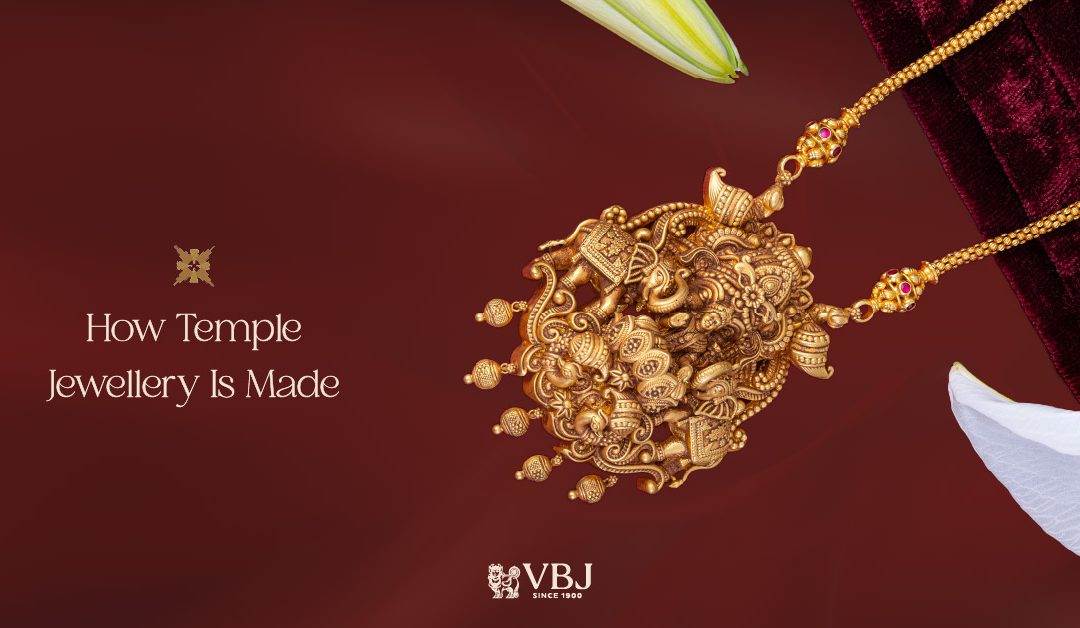
Temple jewellery is instantly recognisable because of its intricate handcrafted motifs and sculptural detailing.
Common features include:
- Goddess Lakshmi motifs
- Lord Ganesha and other deity carvings
- Peacocks and elephants
- Lotus flowers
- Yalis and mythical creatures
- Floral vines and intricate filigree work
These motifs are not merely decorative, they carry deep spiritual and cultural significance.
Temple jewellery is usually bold, highly detailed, and designed to become the focal point of an outfit.
What Is Antique Jewellery?
Unlike temple jewellery, antique jewellery does not necessarily refer to old jewellery. In Indian jewellery, the term usually describes jewellery finished using specialised techniques that create an aged or vintage appearance.
This distinctive antique finish gives the jewellery a rich, heirloom-like character while allowing contemporary pieces to capture the elegance of traditional craftsmanship.
Antique jewellery is admired for its warm gold tones, oxidised detailing, textured surfaces, and handcrafted appeal.
Temple Jewellery vs Antique Jewellery: Key Differences
Although they share traditional influences, several characteristics set these two jewellery styles apart.
| Temple Jewellery | Antique Jewellery |
| Inspired by temples and deities | Inspired by vintage craftsmanship |
| Rich religious symbolism | Vintage-inspired decorative styling |
| Highly sculptural motifs | Textured antique finish |
| Mostly ceremonial | Suitable for both festive and contemporary wear |
| Prominent deity carvings | Floral, paisley, peacock and heritage motifs |
| Grand and traditional | Elegant and versatile |
Design & Symbolism
Temple jewellery places emphasis on storytelling through sacred motifs. Every pendant, necklace, or earring often depicts a deity or symbolic figure associated with prosperity and protection.
Antique jewellery, on the other hand, focuses more on craftsmanship and finish than spiritual imagery. While some antique pieces also feature Lakshmi or peacock motifs, the overall design language is more decorative and artistic.
Finish
One of the easiest ways to distinguish between the two is the finish.
Temple jewellery generally features a bright, rich gold appearance that enhances intricate carvings and sculptural elements.
Antique jewellery is known for its darker, matte, oxidised finish, intentionally created to resemble heirloom jewellery that has aged gracefully over time.
Materials Used in Temple Jewellery vs Antique Jewellery
Both jewellery styles are crafted using high-quality gold, but they often differ in the gemstones and embellishments used.
Temple Jewellery
Temple jewellery commonly incorporates:
- High-purity gold
- Kemp stones
- Rubies
- Emeralds
- Pearls
- Traditional handcrafted detailing
Kemp jewellery is especially popular in South India, with its signature deep red and green stones complementing temple-inspired motifs.
Antique Jewellery
Antique jewellery frequently features:
- Antique-finish gold
- Uncut diamonds (Polki)
- Coloured gemstones
- Pearls
- Textured gold work
- Nakshi craftsmanship
What is Nakshi Jewellery?
Nakshi jewellery refers to jewellery crafted using intricate hand-engraving techniques that create raised designs and detailed relief work. Many antique jewellery collections incorporate Nakshi craftsmanship to achieve their signature handcrafted appearance.
Kemp Jewellery vs Antique Jewellery
Many buyers confuse Kemp jewellery with antique jewellery because both often feature traditional styling.
However:
- Kemp jewellery refers specifically to jewellery set with red and green glass stones or gemstones.
- Antique jewellery refers to the finish and overall aesthetic.
In fact, many temple jewellery pieces are also crafted using Kemp stones, allowing both styles to overlap while remaining distinct.
Which Occasions Suit Temple Jewellery vs Antique Jewellery?
Temple Jewellery
Temple jewellery is ideal for:
- South Indian weddings
- Bridal ceremonies
- Religious functions
- Classical dance performances
- Temple visits
- Festive celebrations
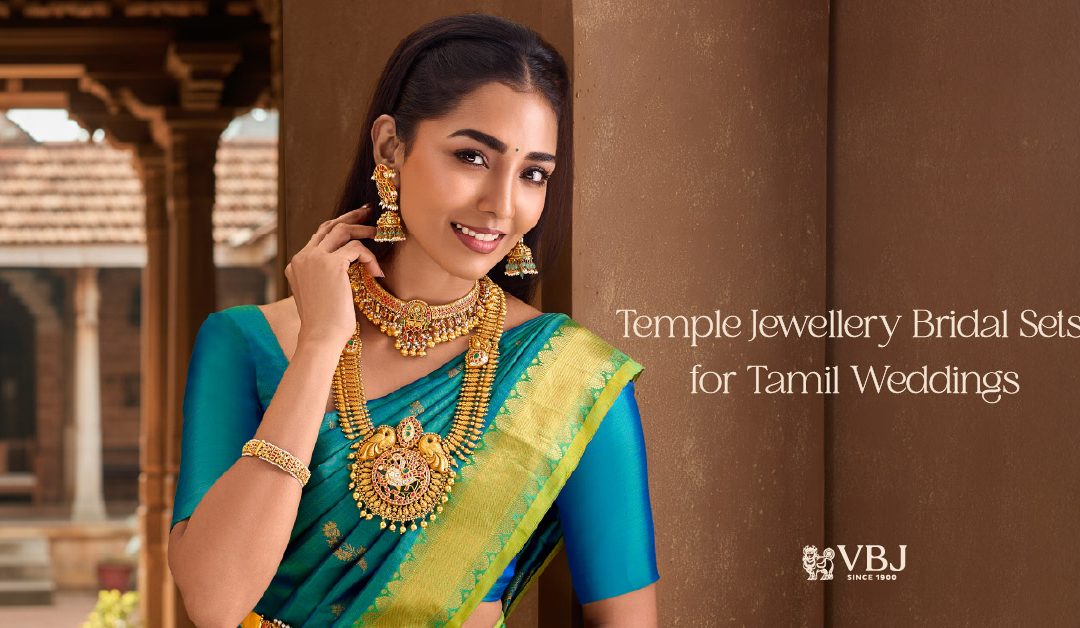
Its grandeur beautifully complements silk sarees, Kanjeevarams, and traditional attire.
Antique Jewellery
Antique jewellery offers greater versatility.
It is perfect for:
- Weddings
- Reception looks
- Festivals
- Family celebrations
- Cultural events
- Contemporary ethnic styling
Because of its subtle finish, antique jewellery pairs effortlessly with silk sarees, linen sarees, designer lehengas, Indo-western outfits, and even modern festive wear.
How to Tell Them Apart When Buying
If you’re shopping for traditional jewellery, here are a few simple ways to identify each style.
Choose Temple Jewellery if you notice:
- Prominent deity motifs
- Heavy sculptural carvings
- Bright traditional gold finish
- Strong religious symbolism
- Classic South Indian bridal aesthetic
Choose Antique Jewellery if you notice:
- Matte or oxidised gold finish
- Vintage-inspired appearance
- Intricate textured surfaces
- Decorative floral and paisley motifs
- Contemporary versatility
Understanding these visual cues makes shopping much easier and helps you invest in jewellery that matches your intended purpose.
Which One Should You Choose?
The answer depends on your personal style and the occasion.
Choose Temple Jewellery if you:
- Appreciate heritage and tradition
- Love bold South Indian bridal jewellery
- Prefer jewellery with spiritual symbolism
- Frequently attend traditional ceremonies
Choose Antique Jewellery if you:
- Prefer understated elegance
- Want versatile festive jewellery
- Love vintage-inspired aesthetics
- Want jewellery that transitions across occasions
Many jewellery lovers choose to own both styles, creating a wardrobe that balances ceremonial grandeur with everyday elegance.
Conclusion
Temple jewellery and antique jewellery each celebrate India’s extraordinary craftsmanship in their own unique way. Temple jewellery reflects devotion, heritage, and ceremonial grandeur, while antique jewellery captures the timeless beauty of vintage artistry with remarkable versatility.
Rather than choosing one over the other, many jewellery enthusiasts appreciate both styles for the distinct stories they tell. Whether you’re drawn to the divine elegance of temple motifs or the rich character of antique finishes, investing in beautifully crafted jewellery ensures your collection remains timeless for generations.
At Vummidi Bangaru Jewellers (VBJ), these traditions continue through meticulously handcrafted creations that honour South India’s rich jewellery heritage while embracing contemporary elegance. Discover temple and antique jewellery collections designed to celebrate every milestone, every tradition, and every story.
Frequently Asked Questions
Is temple jewellery the same as antique jewellery?
No. Temple jewellery is inspired by South Indian temples and religious motifs, while antique jewellery refers to jewellery created with an antique finish and vintage-inspired craftsmanship.
What is the meaning of antique jewellery?
Antique jewellery generally refers to jewellery crafted with an aged or antique finish, giving it the appearance of vintage heirloom pieces.
Is Kemp jewellery temple jewellery?
Often, yes. Kemp stones are commonly used in temple jewellery, although they can also appear in other traditional jewellery styles.
What is Nakshi jewellery?
Nakshi jewellery is characterised by detailed hand-carved relief work that creates intricate, sculptural designs often seen in antique jewellery.
Which jewellery is better for weddings?
Temple jewellery remains the preferred choice for traditional South Indian weddings, while antique jewellery is ideal for receptions, festive occasions, and brides seeking a more versatile look.
0 Comments